

Stochastic Momentum Index: What It Is, How It Works, and Why Traders Use It
The Stochastic Momentum Index (SMI) acts like a meter showing where today’s closing price lands compared to the middle of recent highs and lows.
You’ve tried the Stochastic Oscillator. It swings back and forth from 0 to 100. When it climbs past 20 after dipping low, you jump in. Once it hits 80 on the rise, you get out.
After that, you’ve seen it stick at 80 even when prices climb for days on end. Meanwhile, it drops to 20 while values keep dropping without any turnaround coming. At each key moment, the signal tricks you instead of helping. So now you know - overbought isn’t a sell sign, just like oversold won’t always bring a rise.
The Stochastic Oscillator shows how today’s closing price compares to the highest and lowest levels lately. Because of this math, you get a number from zero up to one00. Pretty straightforward stuff. Makes sense at first glance. Yet it doesn’t work well when tracking real momentum shifts.
The issue is about what it really tracks. Because the Stochastic looks at price against recent highs and lows, not context. So if price hits a fresh peak, it shows 100 - even if movement was strong or just barely up. If price hangs around mid-range, it says 50 - no matter if things are sideways or slowly drifting forward.
You’ve created plans using this signal. Yet despite tweaking its settings, piling on extra rules, mixing it with different methods, the core issue stays unchanged: the Stochastic Oscillator isn’t really tracking speed at all.
The Stochastic Momentum Index tackles this issue straight on.
What Is Stochastic Momentum Index?
The Stochastic Momentum Index (SMI) acts like a meter showing where today’s closing price lands compared to the middle of recent highs and lows - instead of just looking at the highest or lowest points. Because of this small twist, the whole way it moves shifts - and so does what it tells traders.
Back in the 90s, William Blau came up with the SMI after tweaking George Lane’s first version of the Stochastic Oscillator. Because checking price against range edges gave messy readings and early warnings, he saw a problem. So he changed how it was calculated - now it looks at how far the price sits from the middle point of the range.
The math tweak looks small - yet the real-world impact hits hard.
Once price shuts right at the top of its latest zone, classic Stochastic hits 100. Meanwhile, the SMI reaches 100, too. Up to now, both act just alike.
Once price shuts right in the middle of its latest span, old-school Stochastic hits 50. Meanwhile, SMI sits at zero - this is where things start splitting up.
Once price shuts near the bottom of its latest span, old-school Stochastic shows 0. Meanwhile, SMI sits at -100.
The SMI runs from -100 up to +100, balanced right at zero. Because it's set this way, it shows how strong the movement is near balance - instead of focusing on the far ends. So while one side tracks drop-offs, the other highlights build-ups, yet both tie back to central stability.
The midpoint of the latest prices sits at zero on the SMI - this point balances recent peaks with dips. When readings go up, price runs higher than the middle zone. If numbers drop below zero, price slips under it. The size of the move shows distance from balance, measured against the total span lately.
This setup fits better with how real traders see momentum. Not worried about whether the price hits the 80th percentile of its range. What matters is whether it's breaking above or dipping under its average zone, also if that move’s gaining strength or fading out.
How the Stochastic Momentum Index Works
The SMI process has three steps: first, find how far prices are from the middle point; then, smooth that gap twice; also, smooth the price span two times. One divided by the other gives you the end result.
Stage One: Distance from Midpoint
For each bar, calculate:
- Recent high-low midpoint = (Highest High + Lowest Low) / 2
- Distance = Close - Midpoint
This gap might go up or down. If the price ends higher than the middle point, the value turns positive. Should it finish lower, then it’s negative instead. Size shows just how much the price moved away from balance.
Stage Two: Double Smoothing
The raw distance numbers are smoothed two times with exponential averages. First up, hit the distance data with an EMA. Next, run a second EMA on that output. Doing it twice cuts out rapid fluctuations but keeps the core trend intact.
The identical two-step smoothing works on the high-low spread too: first smooth (High minus Low), then smooth it again using EMA. Instead of one pass, they use a follow-up EMA round. This second layer helps reduce noise further while keeping key moves visible. Rather than raw swings, this method tracks tempered shifts over time.
Stage Three: Normalisation
The final SMI value equals:
SMI = 100 × (Double-Smoothed Distance / Double-Smoothed Range)
This split, using the adjusted span, sets the scale right. Instead of raw values, it shows moves as chunks of the usual zone - so +40? That’s 40% up from the centre to the latest peak. Flip side, -60 lands three-fifths down from middle to fresh bottom.
The double smoothing does something special - single passes can't handle it. One round cuts down static, yet leaves things a bit jagged. Doing it again pulls out the core movement from the first cleaned version. That gives signals which track shifts in drive, skipping quick snaps caused by tiny price hops.
You’ve seen how bumpy versus calm indicators behave. The untouched numbers swing wildly. Each price change brings another alert. Instead of spotting real chances, you’re stuck sorting out static.
The SMI’s two-step smoothing fixes that issue. It glides without jitters. Crosses happen more rarely - yet when they show up, they match real price changes instead of random noise.
Standard Parameters and Signal Line
Most setups go with a 5/3 setup for double smoothing, based on the past 10 points. That gives an SMI reacting to shifts in momentum in about two weeks when using daily data - around one hour if you’re looking at 5-minute graphs instead.
These values aren’t special. They’re basic settings that tend to perform okay in different conditions. Feel free to tweak them. Using a longer average window gives smoother results - but delays the signal. Going shorter makes it react faster, though jagged swings may come back.
The SMI often comes with a signal line - basically an average of the SMI, commonly using three periods. It works like MACD but with two moving lines. The SMI moves quicker than the other one. That second line reacts more slowly. When they cross, traders might see it as a hint to act.
Once the SMI moves up past its signal line while both sit under zero, that could hint at a buy chance - pressure’s building after being oversold. If the SMI drops beneath its signal line when both are over zero, it might point to a sell setup - the push is fading after running too hot.
These crossings happen less often compared to regular Stochastic ones - extra smoothing slows them down. That lower count isn't an error; it's intentional. Less frequent alerts lead to fewer fakeouts. You end up winning more since signals fire only when real momentum changes show up.
Why the SMI Differs From Traditional Stochastics
You’ve seen how regular Stochastics give solid alerts when prices move sideways but crash hard in trending phases. Because once price starts climbing, the tool hits max level fast - then just sits there while the market runs up. When direction flips down, it screams "too low" right away - and sticks like glue even as value drops further.
This action comes from the way old-school Stochastic works on math. Because it checks where price lands inside the top-bottom zone. When prices climb hard, every fresh bar hits a higher peak. Its closing point stays close to that peak. The Stochastic stays between 80 and 100 all the time. It doesn't help much - just shows that rising prices keep on rising.
The SMI acts uniquely since it checks how far price is from the centre point instead of tracking its spot between the high and low edges. As markets climb, the middle level moves up when fresh peaks appear. Yet price might not keep an equal distance from this shifting centerline. If push gets stronger, price stretches farther above the midline - so the SMI ticks upward. On the flip side, if the drive fades, price hovers nearer to the centre despite still moving up, the reading drops without any turnaround in price itself.
This difference helps the SMI spot shifts in momentum during current trends - so it’s not only about price being higher than usual, but also if that edge is growing stronger or starting to fade.
You’ve always looked for this data in your oscillators. But instead of just using basic settings, you brought in speed-based filters to tweak classic Stochastics. Then, tied those results with ADX - so it’s easier to tell when price is actually moving versus stuck sideways. On top of that, stacked several indicators together, trying to pull out momentum clues that were supposed to show up naturally all along.
The SMI gives out this info straight up since it's built on math that tracks speed instead of location.
Divergence Analysis With SMI
Divergences show up if price hits a fresh extreme while the oscillator doesn't match it. Though price drops to a deeper low, the SMI forms a shallower one - this is a bullish sign. When price climbs to a stronger peak, yet the SMI reaches a weaker top, that’s bearish instead.
Old-school random swings have a spot issue - same as every random signal out there. Price shifts across its zone can trigger a false alarm, even if the push hasn't really changed direction.
SMI splits matter more since this tool tracks speed right away. Though prices drop lower, if the SMI dips less deep, that second fall has a weaker push behind it. The market hit a new bottom, yet needed less pressure to arrive. Direction shifts where effort fades.
These differences usually show up a few candles before trends shift. SMI clues won’t nail the precise flip point - yet they reveal fading push behind the current move ahead of price swings. Spotting this early helps adjust stop levels, scale back trade size, or get ready to play against the flow.
The double smoothing in the SMI helps spot divergence better - making it easier to trust what you see. Its movements flow smoothly, so highs and lows stand out clearly. Instead of guessing if a choppy line formed a real bottom or just flicked up by chance, you get cleaner turns. Because the swings look neat, confusion fades away.
Zero-Line Behaviour and Trend Identification
The SMI hovers near zero, giving clear markers unlike the Stochastic’s 0–100 scale. When values sit above zero, prices are higher than the middle point lately - so things lean up. Values under zero mean prices hang below that midline - not a good sign. This setup shows trend bias without clutter.
In solid upswings, the SMI stays positive for a long stretch. In sharp downswings, it hangs under zero instead. These steady levels aren't signs of extremes that must reverse soon. They simply show the trend’s sticking around.
This difference fixes a big mistake regular Stochastic traders often make - bailing out before the trend really ends just 'cause numbers get high. The SMI shows how to tell if momentum’s stretched vs. actually flipped. One means it hits ±100. The other happens once it swings past zero again or forms mismatches.
When the SMI moves up past zero, prices have climbed above their usual range - hinting at a stronger market mood. A drop under zero means prices fell beneath that balance point - showing things are turning weaker. These crossings give clear hints of shifts in momentum. Crossing zero acts like a switch, signalling when strength or weakness takes control.
When these crossovers hit turning points, they’re late. Price usually moves before the SMI hits zero. Still, that delay isn’t a big deal - your goal isn’t catching perfect flips. It’s about spotting clear shifts in momentum. Once it crosses zero, you know the change is real.
Practical Implementation Challenges
You get the idea behind it. Because the SMI shows clearer movement clues than old-style Stochastics do. But now comes actually putting it into action.
The double smoothing part needs precise code setup. While tracking the distance values, keep one EMA running - meanwhile, run another for the range data. After that, feed both outcomes into a fresh EMA stage. During division, stay alert; if ranges shrink to zero, skip or adjust to dodge crashes.
The signal line brings extra confusion. Since you’re working out an EMA of the SMI, you end up softening a number that’s already been smoothed two times before. Instead of just one step, your code must handle three smoothing steps at once, yet still keep things quick when fresh data shows up.
To sketch the indicator right, you gotta know how your chart software draws stuff. Use different styles for the SMI and its signal line - don't make them look alike. Highlight the zero level so it stands out. Mark ±40 or ±50 zones plainly; folks often watch these to spot extremes.
Most platforms skip the SMI by default. Yet TradingView offers it right away. A few pro tools have it built in. However, when running NinjaTrader, MetaTrader, or similar software, you’ll either add it manually or grab a solid external option.
This heavy setup effort keeps many traders from trying the SMI - they stay with the standard Stochastic instead, even though it’s flawed, since getting stronger options would mean coding work they don’t want to do.
Optimisation Considerations
The usual 10/5/3 setup runs fine in various markets or periods - yet just because it functions somewhere doesn’t guarantee it fits your case. Since every trader operates differently, your method, chart interval, or asset could perform better with tweaks.
Longer time frames - like 15 or 20 bars instead of 10 - make the reading less jittery, so fewer alerts pop up. That works well for swing trades, especially when you’re trying to skip over daily noise but still catch moves that last several days.
A shorter window - like 5 to 7 bars instead of 10 - makes the tool react quicker. Because it's more sensitive, it picks up shifts in momentum sooner. That means you’ll see signals appear more often. But watch out - not all of them will work well. Some might trick you. Still, this works fine if you're trading fast moves or betting on quick reversals within a few hours.
The smoothing lengths affect how the lookback behaves. Since you're pushing the lookback to 20, maybe drop smoothing down to 3/2 so it still reacts fast. Because you’re pulling lookback back to 5, consider bumping smoothing up to 7/4 - keeps false signals under control.
Trying these tweaks means checking past results first. See if changing values really boosts outcomes - or just fits old patterns by chance. Default options are there for a reason - they work well enough out of the box. Going off track should lead to clear gains, not just new numbers.
What the SMI Doesn't Tell You
The SMI measures momentum relative to the recent price range. It doesn't measure:
- Absolute volatility levels
- Volume patterns or conviction behind price moves
- Order flow imbalances or market microstructure
- Multi-timeframe context
- Fundamental drivers of price movement
- Correlation with related instruments
These limits are important. When SMI is high, price moves sharply from the middle of its range, showing confidence behind the push. Yet that doesn’t guarantee it’ll keep going. Also says nothing about whether trading activity backs it up. Just because the bigger picture fits, that doesn’t guarantee shorter trends match up. Just because related markets moved together before, now they might move separately.
You picked up on this before using different tools. One gadget, no matter how smart it’s built, won’t tell you everything about trades. The market acts like a tangled web. Getting it means mixing several ways of thinking - working together but staying separate.
The SMI shows which way momentum is headed - and how strong it looks compared to recent prices. That detail matters. It’s smarter than the old-school Stochastic tool. Still, only covers part of the picture.
Building Versus Using Pre-Built Tools
You could implement the SMI yourself. The mathematics are published. The algorithm is documented. You have the programming skills. You could dedicate several days to coding, testing, and debugging a custom implementation.
Or you could focus those days on strategy development, backtesting, and refining your actual trading approach whilst using professionally implemented tools.
This choice recurs constantly in trading development. Every hour spent building infrastructure is an hour not spent improving your trading. Every bug you debug in indicator code is a bug you're not fixing in your strategy logic. Every optimisation problem you solve in rendering code is an optimisation problem you're not solving in your execution system.
The Rize Capital platform provides access to professional-grade indicators without requiring you to implement them from scratch. You gain the analytical capabilities immediately. You can evaluate whether tools like the SMI improve your trading before investing development time in custom versions.
This approach doesn't eliminate the need for custom development. You'll still build proprietary strategies. You'll still create unique indicators that reflect your specific market views. But you don't need to rebuild standard tools that already exist in professional implementations.
Your development time is finite. Your attention is limited. Tools that provide immediate value whilst you focus on higher-level strategy work deserve consideration.
The SMI represents one such tool—more sophisticated than the traditional Stochastic, addressing real limitations in momentum analysis, but requiring implementation effort that could be spent on activities that differentiate your trading rather than replicating existing solutions.
You've built tools that work. You've solved problems through development. You understand when to build and when to adopt. The Stochastic Momentum Index is sophisticated enough to matter, standard enough to adopt, and valuable enough to justify the time spent learning its characteristics rather than implementing its mathematics.

Shariful Hoque
SEO Content Writer
Shariful Hoque is an experienced content writer with a knack for creating SEO-friendly blogs, marketing copies and scripts.
Related Posts
Day Trading vs. Swing Trading: Which One Is Right for You?
Day Trading vs. Swing Trading – Learn the key differences and find out which style fits you best.
Best Trend Indicators for NinjaTrader 8: Your Complete Guide
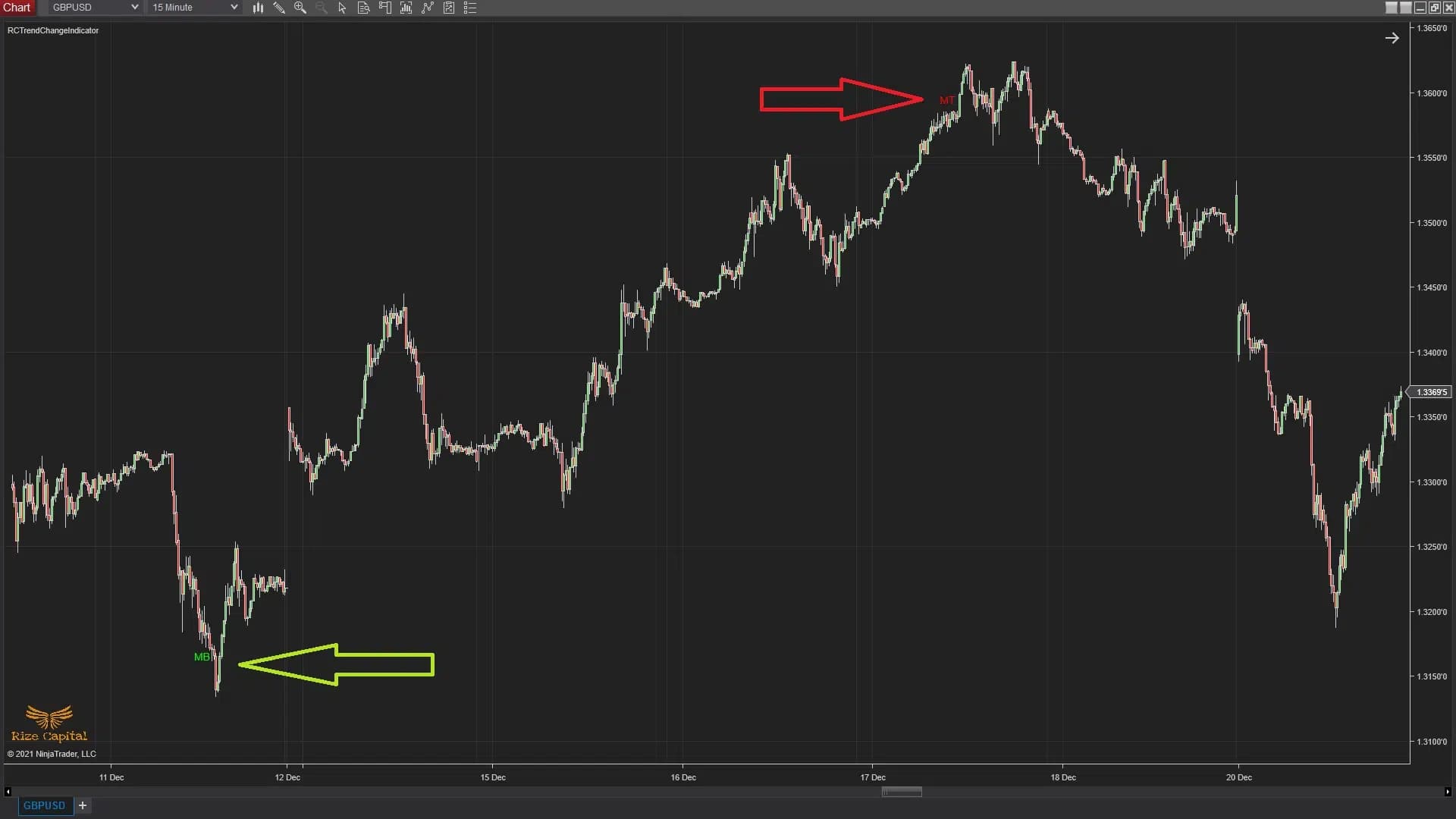
The Trend Change Indicator excels at predicting significant trend changes before they actually occur.
Demo vs. Live Forex Trading: What’s the Difference?
Demo vs. Live Forex Trading – Uncover the hidden gaps, real risks, and game‑changing truths every trader must know